


Throughout life, we often encounter various diseases.Some of them are dangerous and require immediate treatment.And there are those that do not seem to do much harm to health and we sometimes live with them for years without taking any measures to get rid of the disease.These diseases include foot skin fungus and toenail fungus.
Indeed, they cannot be called deadly.However, it is necessary to fight them, because, firstly, they slowly "undermine" the immune system, destroying the body's defense system, and secondly, they do not look aesthetically pleasing, which creates whole complexes in the infected person.How to recognize toenail fungus?Let's take a look at the main signs of toenail fungus.
Foot skin fungus: how it can appear
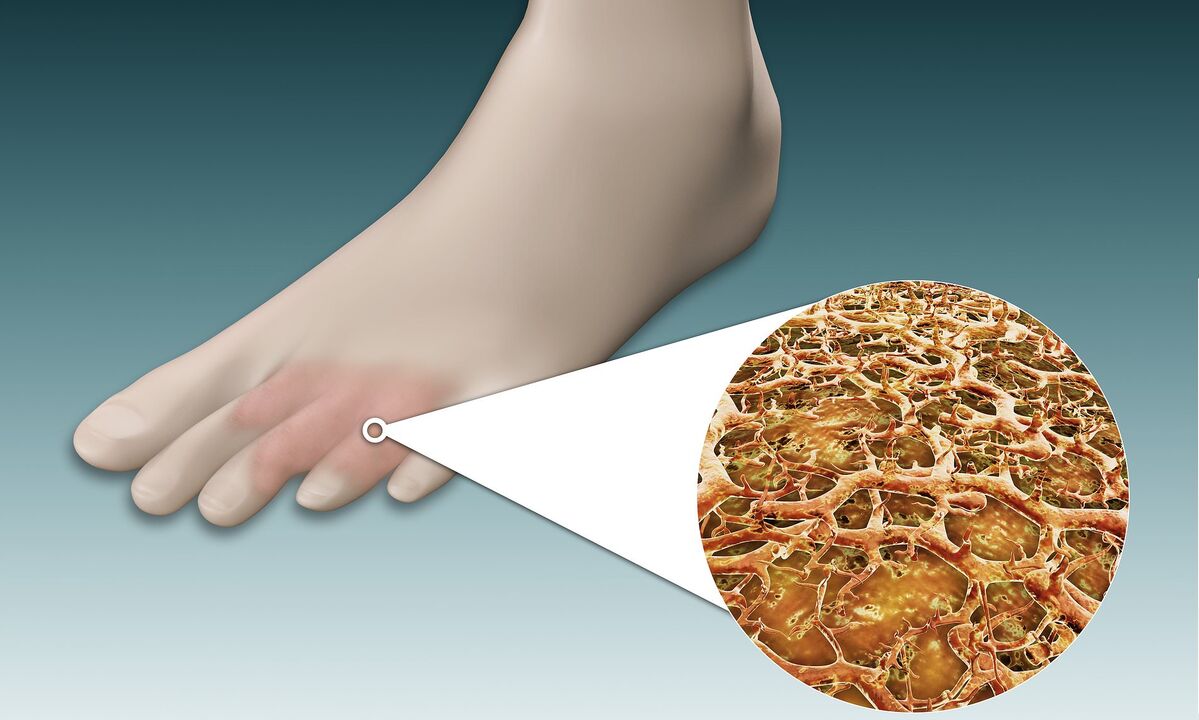
The first signs of a fungus that has "settled" on the foot can sometimes go unnoticed for a long time, especially if a person has a strong enough immune system and the body tries to cope with the invading "foreigner" itself for a certain period of time.Signs of athlete's foot include:
- skin rash, itching;
- blisters or blisters on the legs;
- cracked heels that take a long time to heal.
Most often, the first symptoms are manifested as follows: the skin between the fingers begins to itch, pimples appear and the skin becomes red.The person experiences severe itching, worsening at night.No cream or herbal bath helps to cope with the problem.I am worried about heavy skin.
Sometimes the fungus "attacks" from the heel.In this case, cracks in the heels cannot be healed using folk remedies or pharmaceutical drugs.If you encounter this problem, know that these are signs of a fungal infection and not just the result of scratches or a slight inflammation after, for example, rubbing your feet in uncomfortable shoes.
Toenail fungus requires mandatory treatment.Not only does the carrier of the disease risk contracting an additional infection, which can easily penetrate through the damaged skin, in addition, he also becomes a carrier of the disease.It is not unusual for the symptoms of athlete's foot to be observed in literally all members of the family living together.
Signs of foot fungus should not be ignored.However, it is not always possible to recognize the disease yourself, especially when itching and other unpleasant manifestations have just begun.Therefore, if suspicious symptoms appear, you should consult a dermatologist.He knows how to identify athlete's foot and what methods to use to fight it.
How to know and what to do

So, we know what the manifestations of foot fungus are and now we will carefully examine ourselves, especially after frequent visits to swimming pools or saunas.
There is another type of disease, which, unfortunately, does not immediately attract the attention of the victim.This is a nail fungus.
Sometimes foot fungus spreads to the nail plate and the skin and nails need to be treated immediately.But it happens that a person observes only damage to the nail, while the skin remains clean.How does nail fungus start?
Once you decide to give yourself a foot bath, you may notice a slight change in the color of the nail plate.Most often, at first only 1 nail is affected - the one located on the big toe.The nail looks yellow and dull.Normally, the color of the nail is pink, the plate is quite thin, but there is no brittleness or increased brittleness.If the fungus "visits" you, the nails:
- turns yellow (usually from the edges);
- thickens significantly;
- There are odd spots on the plate.
Carefully examine the neighboring fingers: are there any similar changes there?How does the fungus first appear?If there are no accompanying diseases of the skin of the feet, it can remain for a long time only a cosmetic defect: there is no itching or pain, there is no discomfort.In this case, the person does not pay attention to the symptoms, thinking that he has simply damaged the nail by wearing, for example, too tight shoes.How do you know if it's a fungus?
You will not be able to determine the disease yourself with 100% accuracy.Moreover, even a doctor does not need a visual examination to make a diagnosis.If he suspects the fungal nature of the disease, he will refer the patient for analysis.The nail plate will itch - this is the only way to detect the presence of a pathogenic fungus.
Signs of toenail fungus are a gradual worsening of the situation: without treatment, the affected nail begins to change more and more.Jaundice covers larger and larger areas.Then you can see:
- inflammation of the skin near the nail;
- further color change - to green, gray, even black;
- fragility and increased fragility.
Although the nail becomes very thick and difficult to cut with scissors, it crumbles.Small parts may detach.
If you continue to pretend that nothing is happening, the fungus can "move" to neighboring fingers.In addition, the appearance of sharp edges as a result of the periodic detachment of parts from the nail leads to a complication called "grown nail".The sharp edge breaks and gradually grows into the roll of skin on the side, causing a person to suffer when walking.The skin becomes red and inflamed.
Over time, toenails become thicker and change color.A person experiences significant discomfort due to the inability to visit the pool and wear open shoes in the summer.
How can you get infected?
If you find suspicious signs on yourself, remember if you have recently been to a sauna or bath.The fungus "loves" a warm and moist environment - it is very suitable for it to reproduce there.
Maybe you tried on shoes in a store without "signs" or not long ago a friend gave you her sandals, which she wore, but then bought new ones?Or do you often change slippers at home with your family members?
Any of these cases can cause infection.A microscopic crack or wound is enough for fungal spores to penetrate the skin or nails.At the same time, the one who "gave" you the disease may not even suspect that he is its carrier: if he has a strong immune system, the fungus will not bother him.
If you think you have been affected by a fungus, the first thing you should do is visit a dermatologist.You should not self-medicate: firstly, there are different pathogens that are sensitive to different drugs.Secondly, maybe it is not a fungus at all, but another disease.In both cases, self-medication may either not give results, or "stir" the disease deeper, and then it will be difficult to cope with it.
This is especially true for nail fungus.Sometimes dystrophic changes in the nail plate, which can appear as a result of wearing tight shoes that cause nail deformation, can be confused with fungus.Another reason for changes not related to fungal infection is venous disease, which causes a deterioration of the blood supply.As a result, the nail becomes brittle, the color changes and the person, believing that it is infected, begins intensive treatment with gels and varnishes.Naturally, such a "treatment" will be ineffective.
What to do if you suspect a fungus
If suspicious symptoms appear, you should not run to the pharmacy for medicine, but visit a doctor and do the tests.Until the reasons are proven, special care should be taken not to become a source of infection for others: refuse to visit the pool or sauna and do not wear someone else's shoes.
If a pathogenic fungus is diagnosed, you will have to undergo a course of treatment.If the skin is affected, it will take about a month or two;if there are problems with the nail plates, it can last up to a year.If the disease has progressed sufficiently, it may be necessary to take antifungal drugs along with external agents.
Be attentive to yourself: any disease is easier to cure in the initial stage.This also applies to fungal infections.Be healthy!